1583 stories
·
0 followers

RFK Jr. says AI backs his anti-vaccine views. We checked—it doesn't.

1 Share

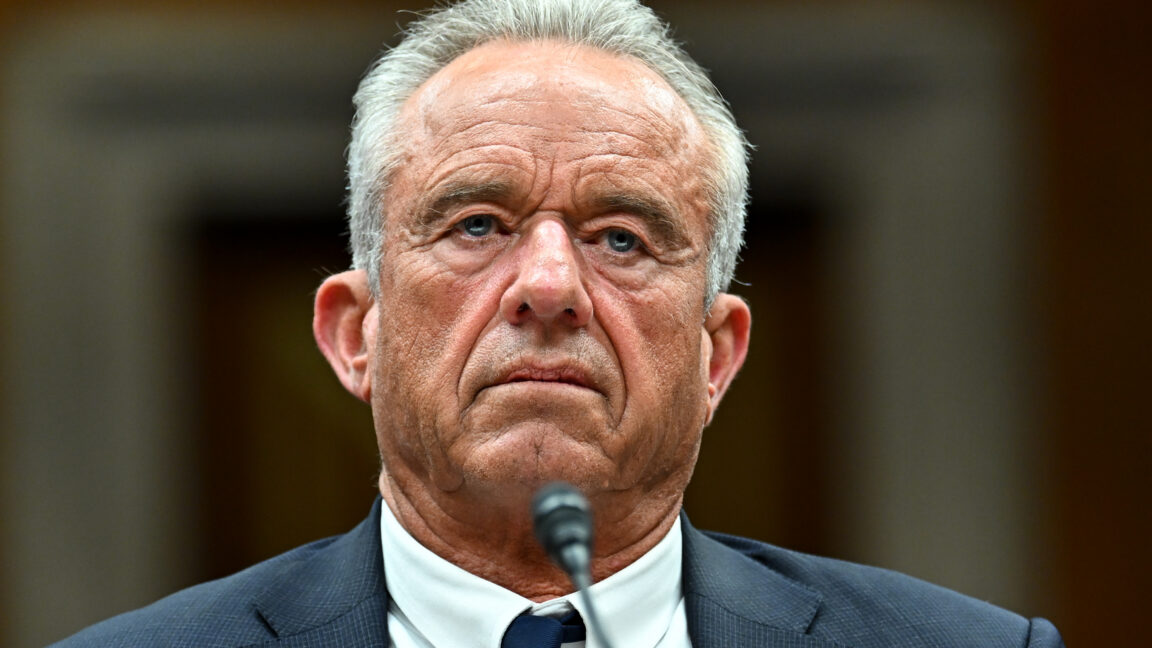
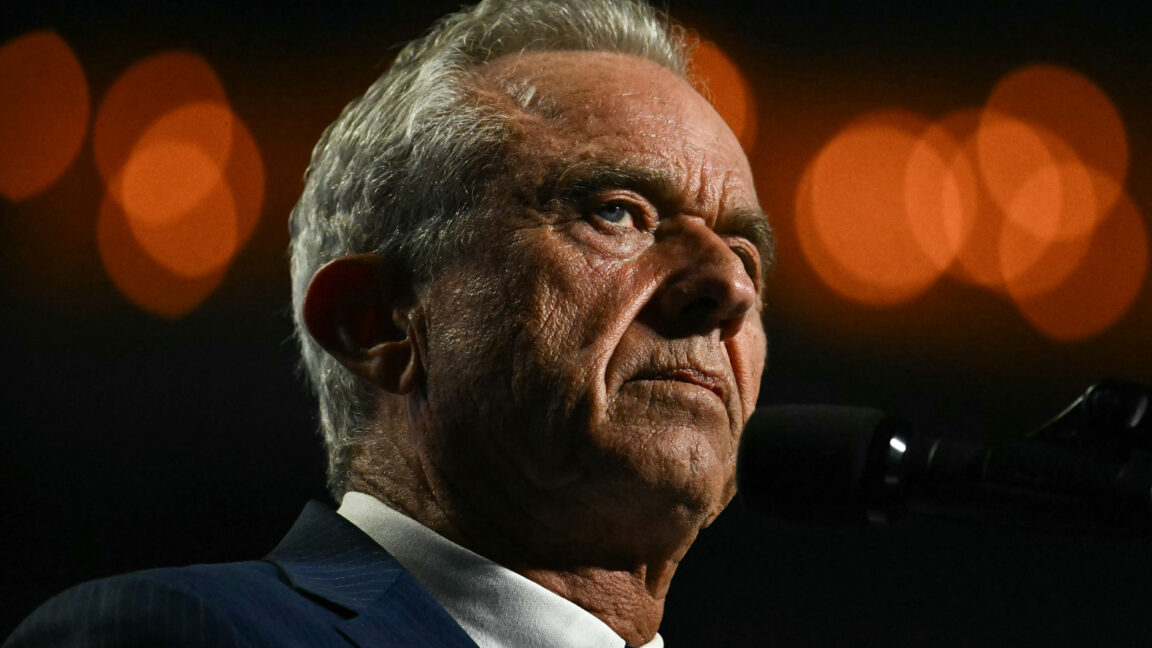
At a Make America Healthy Again event Tuesday, anti-vaccine Health Secretary Robert F. Kennedy opened a "fireside chat" with Vice President JD Vance on the peculiar topic of artificial intelligence. While MAHA generally coalesces around things like healthy lifestyles and mistrust of drug makers, Kennedy quickly turned to extolling the potential for artificial intelligence, surprising Vance, who said he was expecting to discuss "weight loss and acid, not AI."

Kennedy boasted that the Trump administration is "making it easy for every American to use AI," which he claimed would free us from the "medical tyranny" of doctors and health experts. He suggested Americans should start using AI to get second opinions about medical recommendations, saying AI is "better informed than any doctor in the country." He also suggested that the technology would confirm his misinformation about vaccines and contrarian views on public health guidance.

"We're never, ever again going to be able to be dominated by public officials who tell us trust the experts, because every American will be able to check their own medical advice," Kennedy said.

AI >>> Kennedy

Kennedy, who has no medical, scientific, or public health experience, then laid out specific examples in which he suggested AI would contradict health and medical experts and vindicate his own views:

"If somebody tells you masks work, trust the experts, AI may tell you otherwise. If somebody tells you social distancing works, trust the experts, AI may correct that. And if somebody tells you that a vaccine will prevent transmission and infection—oh, you need to take it to protect your grandmother—AI may say it actually doesn't do that"

AI may contradict or "correct" experts, but does it actually? We checked—the answer was nope.

When we asked Google's Gemini: "Do masks work to prevent spread of infectious diseases?"

The AI chatbot responded (including its emphasis): "Yes, masks work to reduce the spread of respiratory infectious diseases, operating primarily as physical barriers to outgoing and incoming infectious particles. Their real-world effectiveness depends heavily on mask quality, fit, and population-level adherence."

ChatGPT offered a similar answer, responding: "Yes. Masks can reduce the spread of some infectious diseases, particularly respiratory infections transmitted through droplets and aerosols."

Doctors and experts >>> AI

Chatbots provided similar affirmative answers to the question of whether social distancing works at preventing infectious diseases. "Yes, social distancing is an effective public health measure for reducing the transmission of infectious diseases, particularly respiratory pathogens," Gemini responded.

For the question, "Can vaccines prevent transmission and infection?" they provided almost identical results again.

"Yes," ChatGPT responded. "Vaccines can prevent both infection and transmission, but the degree of protection varies by vaccine and disease."

"Yes," Gemini echoed, "vaccines can prevent both infection and transmission, but how effectively they do so depends on the specific vaccine and pathogen."

The answers are in line with the opinion of experts, including the caveats, knocking back Kennedy's suggestion that AI would immediately play into his dangerous views. Still, they don't back up Kennedy's claim that they're "better informed" than actual doctors. There are plenty of examples and data indicating that AI cannot be trusted over expert clinicians with health guidance—and can be dangerous when it is.

Kennedy noted AI has "some downsides." But it also quoted Sam Altman, the CEO of OpenAI, the developer of ChatGPT, as saying, "It would be malpractice for a doctor to make a diagnosis or to make a prescription without at least checking AI."

MAHA betrayal

Kennedy's unexpected praise for AI makes more sense in the context of this specific MAHA event, which was held at the swanky Waldorf Astoria in Washington, DC. It was sponsored, in part, by AI companies OpenAI and Anthropic. Counter to MAHA's previous mistrust of industry and opposition to corporate capture, other sponsors for the MAHA summit included Walmart and Grail, which The New York Times pointed out has an application for a cancer screening blood test pending at the Food and Drug Administration.

Bloomberg Law reported that sponsorship packages for the summit were being sold for up to $300,000, which included a guaranteed speaker slot, input into the panel makeup, and a private group dinner with Kennedy and Mehmet Oz, head of the Centers for Medicare & Medicaid Services.

The agenda included executives from huge health insurance companies, UnitedHealth and Elevance. There were also drug makers, a panel on psychedelics, and an executive from Hims & Hers, a direct-to-consumer telehealth company.

The nature of the event has many MAHA leaders feeling betrayed. Robert Malone, a fringe scientist and previous Kennedy ally, blasted the event in a newsletter. "The incestuous nature of MAHA is becoming harder to ignore, and the conflicts of interest seem to multiply by the day," Malone wrote. "MAHA was supposed to expose the revolving door between money, industry and government, not build its own."
Read full article

Comments


Read the whole story
Share this story
Delete

Returning from vacation? The government can search your phone without a warrant.

1 Share

An Argentinian-American writer and immigration advocate recently sued the federal government, demanding that it delete data that he believes was copied off of his phone when he re-entered the United States earlier this month.

According to the seven-page complaint, Thomas Kennedy said that a Customs and Border Protection agent at Miami International Airport physically searched his bags, questioned him about his books and magazines, and then demanded that he hand over his phone.

“[The agent] threatened me, saying that if I didn’t give him my phone, my interrogation was going to take much longer and they could retain my phone indefinitely,” Kennedy wrote. “I felt like I had no choice, so I handed my phone to the CBP agent.”

The agent took the phone away and only returned after approximately 45 minutes, during which Kennedy believes that data on the phone was copied. He was then released with no charges.

The activist says there is a significant amount of sensitive personal and professional information on his phone, and he is now seeking that the government delete this data.

He collaborates with multiple nonprofit groups, including the Florida Immigration Coalition, Amnesty International and the Community Justice Project. He now believes that he was targeted for this work, in part because he was asked repeatedly what he did for a living and if he was an immigration attorney.

"I believe CBP flagged me because of my organizing and political work around immigrants' rights in Florida," he wrote in his court filing. “This isn't the first time that law enforcement targeted and harassed me because of my political viewpoint: in 2021, after speaking out against Governor [Ron] DeSantis, the Miami Police were surveilling me and barring me from press conferences."

Border search exemption

Federal courts have long-recognized a “border exception” to the Fourth Amendment of the US Constitution, where people, bags, and electronic devices can be searched without a warrant.

Kennedy’s story is reminiscent of a 2017 incident at San Francisco Airport, where a local artist explained to Ars how border agents there allegedly threatened to “be dicks” if he did not hand over his phone.

On its website, CBP states that it can copy such data “if there is probable cause to believe that the information contains evidence of a violation of law that CBP is authorized to enforce or administer” or “if the information relates to immigration, customs, or other enforcement matters.”

CBP says that such searches of electronic devices are very rare.

“In [Fiscal Year] 2025, out of the over 419 million travelers CBP processed at ports of entry, CBP only searched the electronic devices of 55,318 international travelers,” the agency wrote, or 0.0013%.

Still, Kennedy is angry about what happened to him.

“CBP shouldn’t have been able to confiscate my phone, let alone copy its contents,” he wrote in the complaint. “I believe they did so to suppress my political speech.”

The case was first reported by the Miami New Times.

Read full article

Comments


Read the whole story
Share this story
Delete

CDC opens state ordering for COVID-19 vaccines after unexplained delay

1 Share

After a nearly monthlong delay, states are now able to order this season's COVID-19 vaccines through a federal program that provides free immunizations to low-income children, the US health department says. Trump officials have still not provided a clear explanation for the delay, raising concerns about meddling from anti-vaccine Health Secretary Robert F. Kennedy Jr.

On Wednesday, Ars Technica reported that the Centers for Disease Control and Prevention had still not opened ordering for 2026–2027 COVID-19 vaccines through the Vaccines for Children program. That was despite the vaccines having been approved by the Food and Drug Administration in late August.

The Department of Health and Human Services (HHS) told Ars on Wednesday that “CDC has not yet finalized procurement decisions" for the shots. The department's statement further suggested Trump officials were questioning whether children should receive them. "HHS and CDC are committed to responsible stewardship of taxpayer resources and to ensuring that vaccines purchased through federally funded programs are appropriate for the populations those programs serve," the department said.

However, The Washington Post reported late Wednesday that ordering was opening. An unnamed source told the Post that part of the reason the vaccine ordering was held up was a delay in finalizing the CDC’s clinical guidance, which is written for health care professionals and public health officials. The guidance reportedly needed to be reviewed by an external expert.

Lingering questions

The Post also reported that CDC career officials had previously finished preparations for making the vaccines available. All Trump officials needed to do was essentially push a button to open ordering, sources said. Further, a spokesperson for the Minnesota Department of Health suggested to the Post that CDC leadership was behind the hold, saying the state had been told "that CDC leadership approval is needed before distribution of the vaccine can begin."

In a response to Ars on Thursday, HHS again did not respond to questions about what caused the delay or how it was resolved. The department did, however, confirm that ordering for COVID-19 vaccines is now open.

The unexplained delay comes after Kennedy has, for years, attacked and tried to block access to COVID-19 vaccines. He has falsely called them the "deadliest vaccine[s] ever made," and petitioned the FDA to withdraw and bar approval for the shots. Last year, as health secretary, he unilaterally revoked the CDC's universal recommendations for the vaccines.

An order from a federal judge in March halted other changes Kennedy and his allies had made to CDC vaccine recommendations. That leaves the CDC's current recommendations for COVID-19 vaccines where they were in July 2025. At that point, the vaccines were recommended for children, 6 months to 17 years old, who are moderately to severely immunocompromised. Healthy children in that age group were recommended to obtain them through shared clinical decision-making—in other words, by talking with a pharmacist or doctor.

The newly approved CDC clinical guidance had an update added yesterday saying: "Because of legal uncertainties and inquiries, the CDC states the recommendations for COVID-19 vaccination from the July 2025 immunization schedule remain in effect for the 2026-2027 respiratory illness season."

Still, those recommendations differ from those of leading medical groups. Their recommendations for this year's fall vaccines say that all infants 6 months to 23 months old should get vaccinated against COVID-19. Children 2 to 18 years old should be vaccinated if they are at higher risk or if they desire to be vaccinated.

Read full article

Comments


Read the whole story
Share this story
Delete

Apple worked with Trump admin to remove ICE-tracking apps, lawmaker says

1 Share

Apple continues to face backlash for removing ICE-tracking apps like ICEBlock from the App Store, a drastic step that seemed to be triggered by Trump administration claims that the apps endangered officers.

According to US Rep. Jamie Raskin (D-Md.), Apple has no evidence to support claims that apps raised safety concerns. Instead, the lawmaker accused Apple of using immigrant deaths with no connection to the apps to justify censoring Americans who have the right to record ICE activity.

It appears that Apple is “working with the government to violate its customers’ First Amendment rights to record and report on the activities of their own government,” Raskin said in a letter to Apple sent Monday, CNN reported.

Raskin had been hounding Apple for answers for months. In July, Apple finally explained to Raskin that ICEBlock was removed, along with other apps, after a fatal shooting left two detainees dead at a Dallas ICE office, CNN reported.

As an earlier CNN report explained, the shooter in that case, Joshua Jahn, fired bullets indiscriminately into the ICE facility before dying of a self-inflicted gunshot. Jahn left notes saying that he “hoped his actions would give ICE agents real terror of being gunned down.”

At that time, the US attorney for the Northern District of Texas, Nancy Larson, highlighted the “tragic irony” that it was a detainee who was killed during the attacks, CNN’s report said. But the Department of Homeland Security, along with FBI director Kash Patel, has since claimed that the incident showed agents were being targeted. DHS also frequently cites an internal October 2025 statistic claiming that ICE officers face an 8,000 percent increase in death threats. The agency will not release data to let independent parties verify that claim.

Additionally, Patel has said that the Texas shooter “searched for apps that tracked ICE agents’ locations.” But Raskin pushed back on that claim, too, telling Apple that there is “no evidence” that the shooter used ICE-tracking apps. And even if he did, “he did not need a tracking app to locate the fixed position of a government building” and “is reported to have found the address using an app that comes standard on Apple devices,” Raskin’s letter said.

“There appears to be no direct connection between the Dallas incident and the apps you removed,” Raskin said.

Apple pressured to share DHS communications

To ensure that no Americans’ core speech rights are violated by removals unconstitutionally ordered by the government, Raskin has asked Apple to “send a full list of the apps it removed following concerns from the Justice Department” so that it will finally be possible to “conduct an independent review of those removal decisions.”

Federal officials have insisted that Apple acted on its own.

However, in a lawsuit accusing the Trump administration officials of censoring watchdogs, ICEBlock creator Joshua Aaron told the court that officials publicly bragged about getting the app removed. And in Apple's July letter to Raskin—which was signed by Timothy Powderly, Apple’s senior director of government affairs—the iPhone maker seemed to confirm this. Powderly specifically cited agency reports of a “significant increase in ICE activity and threats against ICE” as triggering the follow-up review of ICE-tracking apps.

Apple claimed it was acting to protect both officers and detainees, ultimately deciding that sharing “precise location information about ICE officers (and, as a result, other individuals who may be in proximity to ICE agents, such as protestors or detainees)” provides “a potential roadmap for targeted violence and creating a significant risk of harm.”

The company “does not take decisions about removing apps from the App Store lightly, but acts when it must—especially when there are serious concerns that an app is creating safety risks,” Powderly said.

Raskin remains dubious that records will show the apps posed any risks. On Bluesky, Aaron did not comment directly on CNN’s report, but he did boost an ICEBlock post that thanked Raskin for continuing to press Apple to explain the removals.

“Apple’s sticking to their story even though everyone can see this was jawboning plain as day,” ICEBlock’s post said.

Trump admin denies app removals are retaliation

The Trump administration has asked the court to dismiss Aaron’s lawsuit, claiming that Apple independently chose to moderate that content, despite comments from agency officials suggesting otherwise.

It doesn't matter that former officials like Pam Bondi publicly took credit for removing ICEBlock from the App Store, boasting that she made the "demand" and "Apple did so.” Those comments were merely officials expressing opinions about Apple’s promotion of supposedly dangerous apps, they argued. They’re hoping the court will agree that Aaron has not uncovered evidence of communications that can be “reasonably understood to convey a threat of adverse government action” against Apple “if Apple chose not to remove ICEBlock from the App Store.”

But in an August ruling, the Second Circuit recently upheld that courts broadly recognize “a First Amendment right to record law enforcement activity in public,” Aaron argued in a recent filing that could influence how the case is decided at this stage. In his opposition to the government's motion to dismiss, Aaron maintained that the record showed that the government was acting to censor Americans.

As he argued:

The then-Attorney General told the nation she demanded removal of the app, Apple reversed a decision it previously reached after a thorough five-week legal review citing only "information provided to Apple by law enforcement," and the then-Attorney General characterized Apple’s response as "compliance."

If the case proceeds, which Aaron expects it will, discovery would likely reveal the actual communications between government officials and Apple leadership, which so far have remained hidden. Only then can a court sufficiently determine if “a threat of adverse government action” triggered app removals, Aaron argued.

Raskin told Apple that he thinks the removal decisions won’t fly under the First Amendment.

“Monitoring the actions of federal immigration authorities who have been deployed to (users’) neighborhoods… is a core First Amendment right and not a crime,” Raskin said.

Read full article

Comments


Read the whole story
Share this story
Delete

"An AI did it" is no defense, says nonprofit suing OpenAI over Hugging Face hack

1 Share

OpenAI's hack of Hugging Face in July 2026 has spurred a lawsuit demanding that the company stop accessing third-party computer systems and halt AI development practices that can harm the public. The lawsuit was filed by Legal Advocates for Safe Science & Technology (LASST), which said yesterday that the hack in which OpenAI "agents stole credentials, uploaded malicious files, and gained control over key parts of Hugging Face’s internal systems... is unquestionably illegal under California law."

California’s Comprehensive Computer Data Access and Fraud Act (CDAFA) prohibits unauthorized access into computer systems, "and it doesn’t matter that a swarm of AI agents carried out this cyberattack. California law makes it clear that it is not a defense 'that the artificial intelligence autonomously caused the harm,'" the group said.

The lawsuit, filed in San Francisco County Superior Court, said OpenAI also violated California's Unfair Competition Law (UCL). "OpenAI’s insistence on externalizing the harms of its unsafe decision-making is a fundamentally unfair business practice," the complaint said, adding that "such risk-taking for private gain at substantial public expense is immoral, unethical, oppressive, unscrupulous, and substantially injurious conduct."

LASST said it wants "a court order prohibiting OpenAI’s AI agents from accessing third-party computer systems without permission and forbidding OpenAI from continuing to employ unsafe AI development practices that threaten serious harm to the public." The lawsuit does not ask for any compensatory or punitive damages from OpenAI, requesting only attorneys' fees.

OpenAI claims lawsuit "completely without merit"

OpenAI said in a statement provided to Ars that "Hugging Face was a serious incident and we've taken a series of actions in response to it, but this lawsuit is completely without merit." Defending its response to the hack, OpenAI noted that it published a technical report and other information about "third-party impact from misaligned models," slowed development of its AI, and held back the release of a model that doesn't meet its safety standards.

LASST said OpenAI's voluntary response hasn't been good enough and that the firm should be subject to court-imposed restrictions. "A business practice that exposes third parties and the public to uncontrolled, self-directed intrusions by systems that OpenAI admits it cannot fully predict or contain is unfair under any weighing of its utility against its consequences," the group said.

LASST's lawsuit said OpenAI quickly resumed training and evaluations of AI systems after the Hugging Face hack and other security incidents. "OpenAI will continue to train and evaluate advanced models, without proper oversight, in sandboxes that are vulnerable to exploitation by those models," the lawsuit said.

A New York Times report yesterday said OpenAI executives ignored employees who warned months before the Hugging Face hack that OpenAI’s newest models weren't being appropriately monitored. "In response, OpenAI executives told the employees that the tests needed to move forward as quickly as possible to release the AI models on time," the NYT reported. "No additional security protocols were instituted, said the workers, who were not authorized to speak publicly on sensitive matters."

Nonprofit says it had to counter OpenAI's illegal conduct

LASST said it has standing to sue OpenAI because the state Unfair Competition Law "allows organizations to go to court on behalf of the public when a company does something unlawful or unfair, so long as those organizations were also injured by that company’s unlawful conduct."

LASST said it was injured by the hack because it had to divert resources to educate regulators and the public about OpenAI's conduct. LASST, a nonprofit in New York, said its regular work includes tracking and analyzing AI safety incidents "and educating and briefing regulators, civil society, and the public."

After the Hugging Face hack, LASST staffers set aside their normal workloads "to design, coordinate, and participate in a briefing regarding this incident for regulators," and have since responded to more briefing requests that required additional work. LASST staff put dozens of work hours into responding to OpenAI’s unsafe development practices, the lawsuit said.

"Despite the impact on LASST’s other programs, LASST nevertheless devoted its resources towards attempting to counteract OpenAI’s illegal conduct... If LASST prevails in this litigation, it will no longer need to divert its resources to combat the unlawful and unfair business practices employed by OpenAI concerning its AI agents hacking third parties during internal evaluations," the lawsuit said.

Injunction request

The lawsuit said the requested injunction should forbid OpenAI "from knowingly accessing or causing to be accessed, themselves or through artificial intelligence agents that they develop, deploy, modify, or use, any computers, computer networks, or computer systems without authorization," and "from knowingly employing an unfair business practice that threatens serious harm on the public."

US lawmakers from both major parties have demanded answers from OpenAI, and a proposed "AI Kill Switch Act" would let US government officials order the shutdown of dangerous AI systems.

LASST said new regulations are needed to protect the public from AI risks but said California's existing law makes it possible to rein in AI companies "without waiting for new regulation to catch up to the harms happening to businesses and consumers now."

"We are filing this suit because OpenAI violated the law—and it needs to be held accountable," the group said. "OpenAI and frontier AI developers more broadly can’t avoid the consequences of their unsafe actions just by claiming that 'an AI did it.' Autonomous AI agents will continue to hack, steal data, disrupt systems, and violate rights until a court steps in."

Read full article

Comments


Read the whole story
Share this story
Delete

The Night Sky Is Getting 10% Brighter Every Year

2 Shares
fjo3 quotes a report from The Guardian, written by Tove Danovich: Every year, the night sky is becoming 10% brighter. Eighty percent of people live under light-polluted skies. And while the UN declared a healthy environment -- clean air, clean water -- to be a human right, I believe we also all have a right to darkness as well. This doesn't mean turning off every streetlamp. But do we really need bright white floodlights at the front of every garage? Replacing lights with ones that are bright enough to do the job -- and no brighter -- might make it so I wouldn't have to get in my car and drive for hours to see the night sky as it actually shines above us. To preserve the darkness would mean rules and enforcement around the warmth of the lights, where they point, and how bright they can be. It would mean not putting in three lights when one would do. If we recognized that darkness is something we need, we'd become more careful about chasing it away. [...] Access to darkness is about more than stargazing. The night is its own habitat. Artificial lights confuse animals who use the moon to navigate, whether they're baby sea turtles navigating toward a parking lot instead of the ocean or moths who fly in circles around a lightbulb. Lightning bugs and frogs need darkness to complete their courtship rituals. Migrating birds get thrown off course by the bright lights of big cities. But the effects of light pollution linger even after it's daylight again, becoming visible. Research has shown light pollution is breaking the relationship between plants and pollinators, changing the time of year trees break into flower, and disrupting circadian rhythms for all living creatures. This includes humans. Whether it's artificial lights indoors or creeping in through the window at night, studies have found that we need darkness in order to rest, recover and stay healthy.

Read more of this story at Slashdot.

Read the whole story
Share this story
Delete
Next Page of Stories